
Halloween, Saints, and Everyday Connections: How Faith Fits into the Fun
You’re standing in the seasonal aisle, picking out candy for Halloween and playing the annual guessing game: how many trick-or-treaters will show up, and should you buy the candy you actually like — or the kind you won’t eat half of before October 31?
Then you hear it: “Christians shouldn’t celebrate Halloween.”
Wait. Should we be rethinking the pumpkins on the porch? Before you put away the candy bowl, there’s a little history worth knowing. God has a wonderful way of hiding in plain sight within our everyday traditions — and Halloween is no exception.
The Story Behind "All Hallows' Eve"
Halloween actually gets its name from All Hallows’ Eve: the evening vigil before All Saints’ Day on November 1. “Hallows” simply refers to saints, or holy ones — so our connection to the communion of saints is built right into the name itself!
Of course, Halloween has picked up plenty of modern customs along the way, and not every decoration in the seasonal aisle has a saintly backstory. But enjoying costumes, carving pumpkins, and handing out candy doesn’t mean you’re doing something contrary to your faith. We can be thoughtful about what we take part in while still enjoying neighborhood fun. (The Catechism reminds us to avoid dark practices like fortune-telling or seeking occult powers, but those boundaries apply year-round — not just on October 31!)
A few "Did You Know?" faith facts
I love learning how our Christian faith fits into daily traditions and activities. Halloween is one of those traditions where that connection seems to have gotten lost along the way. So, while you don’t need to turn Halloween into a lesson plan, you can weave some of these fun faith facts into the conversation while carving a pumpkin or sorting candy — or while having coffee with a friend.
- Irish immigrants brought many familiar Halloween traditions to North America. According to EWTN’s history of Halloween, customs like dressing up, carving jack-o’-lanterns, and trick-or-treating made the journey with them.
-
Going door-to-door for treats started as a way to pray for the dead. Early traditions involved children receiving treats in exchange for promising to pray for a family’s deceased loved ones — a meaningful ancestor to our modern trick-or-treating!
-
The Church was honoring saints long before modern Halloween. The tradition grew over centuries, starting with early Christians honoring martyrs who gave their lives for the faith.
-
All Saints’ Day celebrates the "unnamed" saints, too. November 1 honors all the holy men and women in heaven, including those who will never appear on a holy card or church sign.
-
November 2 gives us a dedicated day for loved ones. On All Souls’ Day, we pray for the faithful departed. It’s a gentle moment to share a memory of someone you miss and offer a prayer together.
Share one or two and let the conversation go naturally from there — someone might want to ask about their patron saint, while someone else will be completely focused on trading their hard candies for chocolate!
Bringing Saints into the Celebration
As I was researching this, I remembered the saint costumes from our friends’ Catholic school, where the children dressed up to celebrate All Saints’ Day. If you’d like to bring that tradition into your own celebration, dressing as a favorite saint is a sweet place to start. Choosing the costume can become part of discovering the saint’s story.
These are just a few ideas:
- St. Francis with a stuffed animal
- St. Joan of Arc with cardboard armor
- St. Thérèse carrying roses
But if saint costumes aren’t in your family’s plan, simply choose something cheerful or imaginative — skipping any darker themed costumes that make you feel uncomfortable. There are so many possibilities — and a homemade astronaut helmet or a pair of puppy ears can bring plenty of smiles (and treats).
Finding Connection in Everyday Moments
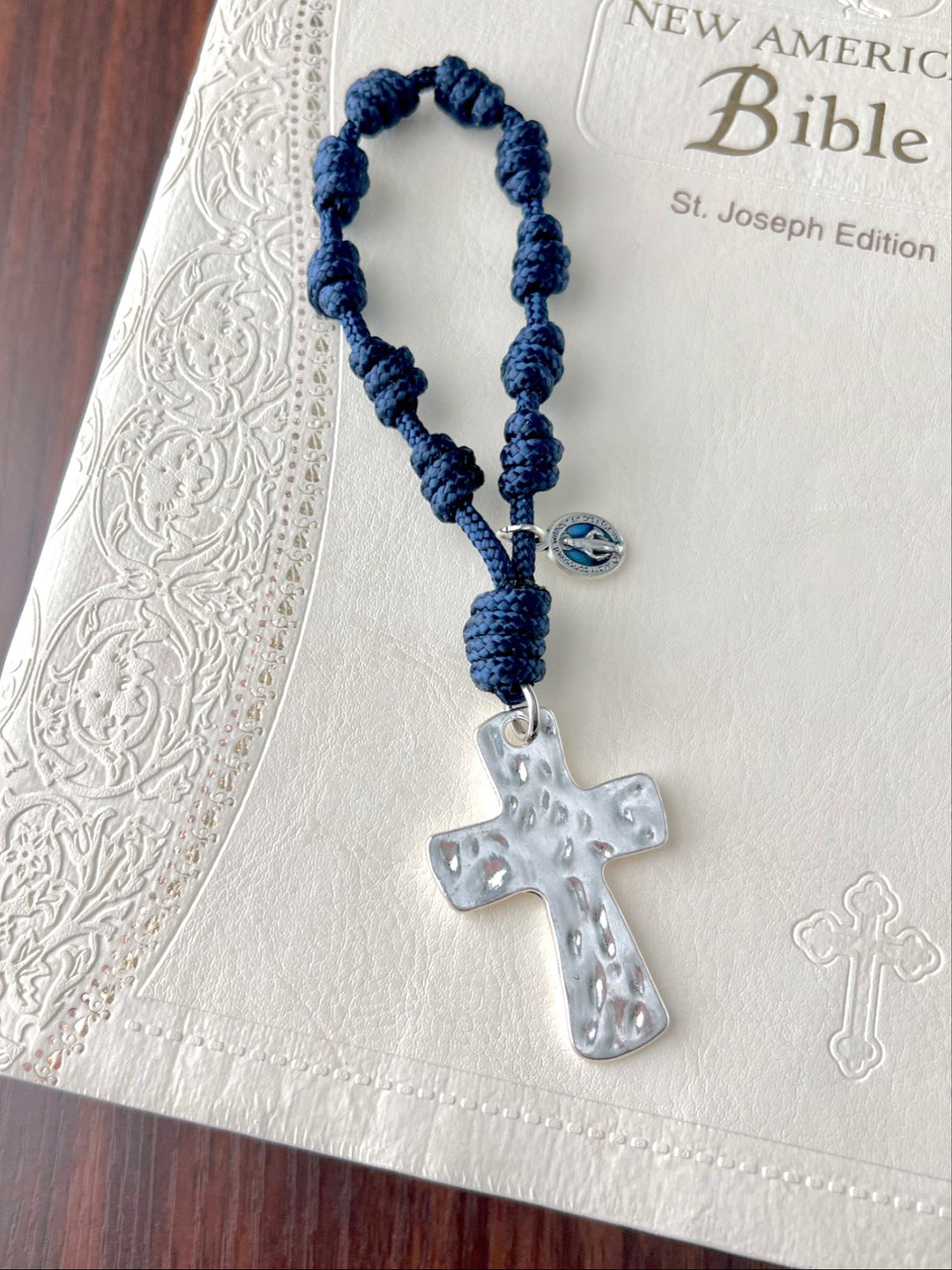
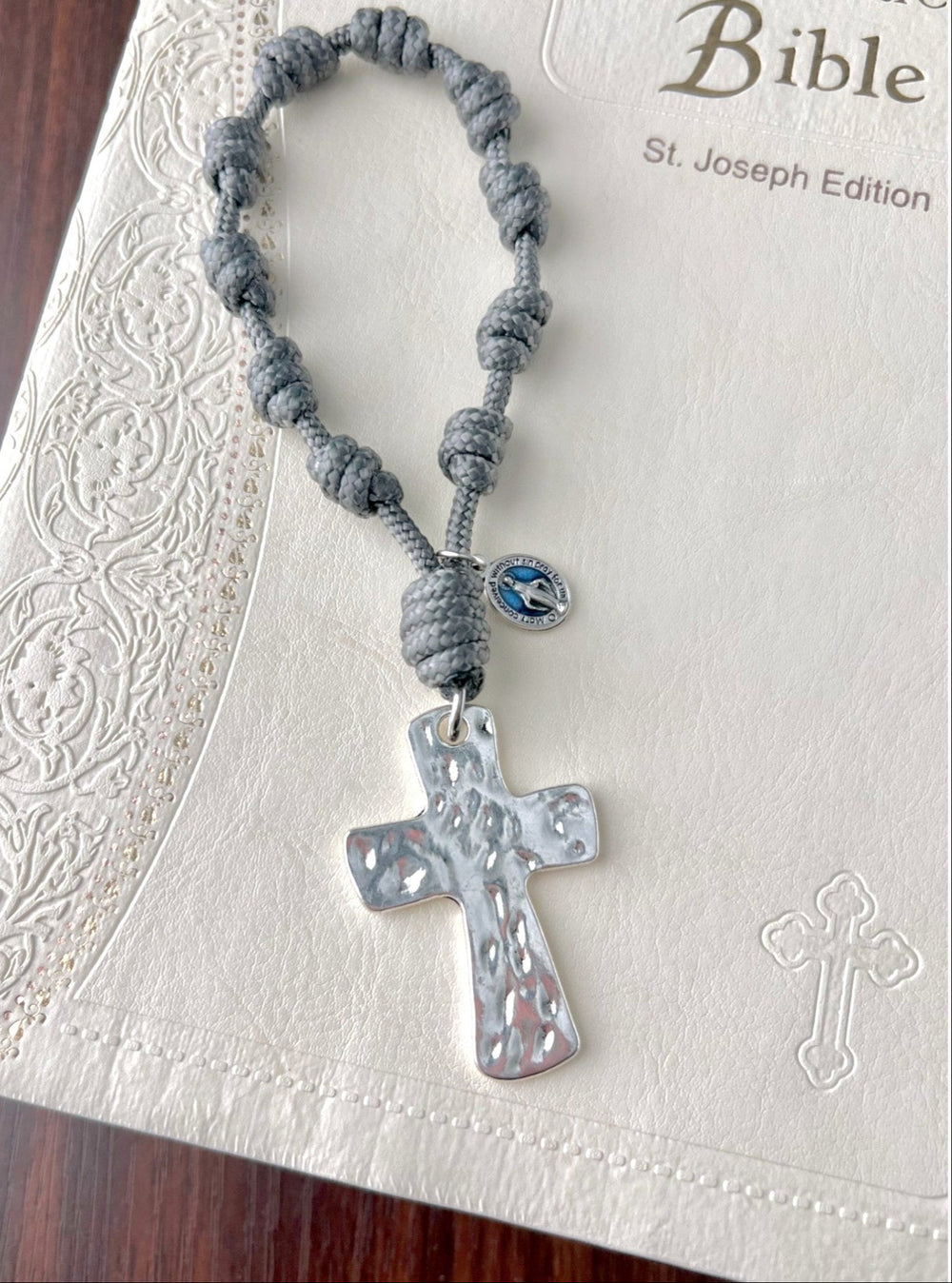
If reflecting on these holy men and women brings a favorite saint to mind, you can carry a little reminder of their example with you every day. Just as reaching for a rosary or a saint medal on your keychain brings a moment of peace to a busy day, these traditions remind us that we are never walking alone.
You can explore our handcrafted rosaries and devotional pieces in our Saints collection at Knots of Grace — something to keep close long after the pumpkins have left the porch.
So enjoy the costumes. Be generous with the candy. And when November arrives, take a little of that same enthusiasm with you as we celebrate the saints and pray for those we love. There’s plenty of room for faith and fun in these festive days!
Want to dive deeper into Catholic Halloween roots?
Want to dive deeper into the history behind these traditions? Here are two great articles I referenced while writing this:
- from EWTN: Halloween: Its Origins and Celebration
- from Vatican News: The Catholic roots of Halloween, the Vigil of All Saints' Day




Thank you, Richard. I’m so glad you enjoyed this article. Please feel free to share it. And if there are other holy days you’d like me to write about, please let me know! Come Holy Spirit! 🕊️🤍🙏
Great article. Your articles are always applicable for “today”. Secularism has taken many of our holy days and devotions and turned them into something we no longer recognize. Everyone needs to read this! Thank you for sharing your spiritual gifts with us 😇✝️
Leave a comment