
Learning the Rhythm of the Church Year (Again)
And I honestly laughed.
Because even after growing up Catholic and spending the last fifteen years deepening my faith, there are still prayers I don't know, saints I've barely met, and feast days that surprise me when they arrive.
Corpus Christi is one of them.
I know it shouldn't - it's one of the core celebrations of the year. And somehow every year I find myself caught slightly off guard by it. Maybe it's because we've just transitioned into Ordinary Time. Maybe because we don't talk about "preparing for" it. Or maybe life simply moves quickly and I'm not paying enough attention. Likely the latter.
But it got me thinking ... How are we supposed to know all of it? The prayers, the saints, the feast days, the traditions.
Because the Church calendar is so incredibly rich. Feasts and seasons and prayers layered over centuries. Some have been celebrated for hundreds of years. Others were added later as devotion grew or the Church responded to particular needs.
And in a way, that’s a gift - to be rooted in something so alive and so old at the same time.
But if I’m honest, it can also feel like a lot. And I wonder sometimes if earlier Christians ever felt that too, or if this was simply the rhythm of their everyday life.
For most of Christian history, people learned the Church year through their parish, their families, art, and the community around them. I don’t think it was something they had to “keep up with” in the way it can feel today.
Now we can open our phones and suddenly there’s a new saint, a new novena, a centuries-old devotion we’ve never heard of, a feast being celebrated somewhere across the world.
There’s more available to us than ever before. And that’s a gift - but it can also feel like a lot.
And it makes me wonder if one of the simplest ways we still learn the Church year today is the same way Christians always have: by showing up to Mass each Sunday, letting the readings, the prayers, and the rhythm of the liturgy quietly form us over time within our parish community.
I know I can overlook how much is still meant to be received there first - week by week, season by season - rather than held all at once.
And still, sometimes it feels like there’s always something else I should know, another feast or devotion I’m missing. And in those moments, I have to remind myself that the Church isn’t asking me to master everything at once.
And it brings me back to seasons and rhythms.
The Church year moves in seasons - waiting and celebration, fasting and feasting, repentance and rejoicing. We return to the same mysteries again and again, not because we’re behind, but because we’re meant to keep entering them more deeply over time.
And each time, hopefully, they begin to shape us.
A feast that barely registers one year can become deeply meaningful the next. A saint I know almost nothing about today might become a companion in a future season. A prayer I’ve said a hundred times can suddenly land differently when life changes.
Faith tends to grow like that.
Not all at once. Not through pressure or performance. But through repeated encounters with Christ.
So lately, I’ve been trying to approach the liturgical year with a little more peace and a little less urgency. But I still catch myself wanting to know everything.
Instead, I’m learning to notice what’s right in front of me. What season are we in? What is the Church inviting me to pay attention to right now? Which feast or Scripture or saint is quietly showing up? What prayer am I praying right now - and what if I read the words while I recite them?
That feels a lot more life-giving than trying to keep up.
Because maybe the invitation isn’t to perfectly celebrate every feast and devotion. Maybe it’s just to let the rhythm of the Church slowly shape us over time.
Year after year. Season after season. Step by step.
And when it all starts to feel like too much, I keep coming back to something simple:
- One pause.
- One breath.
- One prayer.
- One decade.
- One quiet moment with Mary, Jesus, or the Holy Spirit.
The simplest step is often the most faithful one.
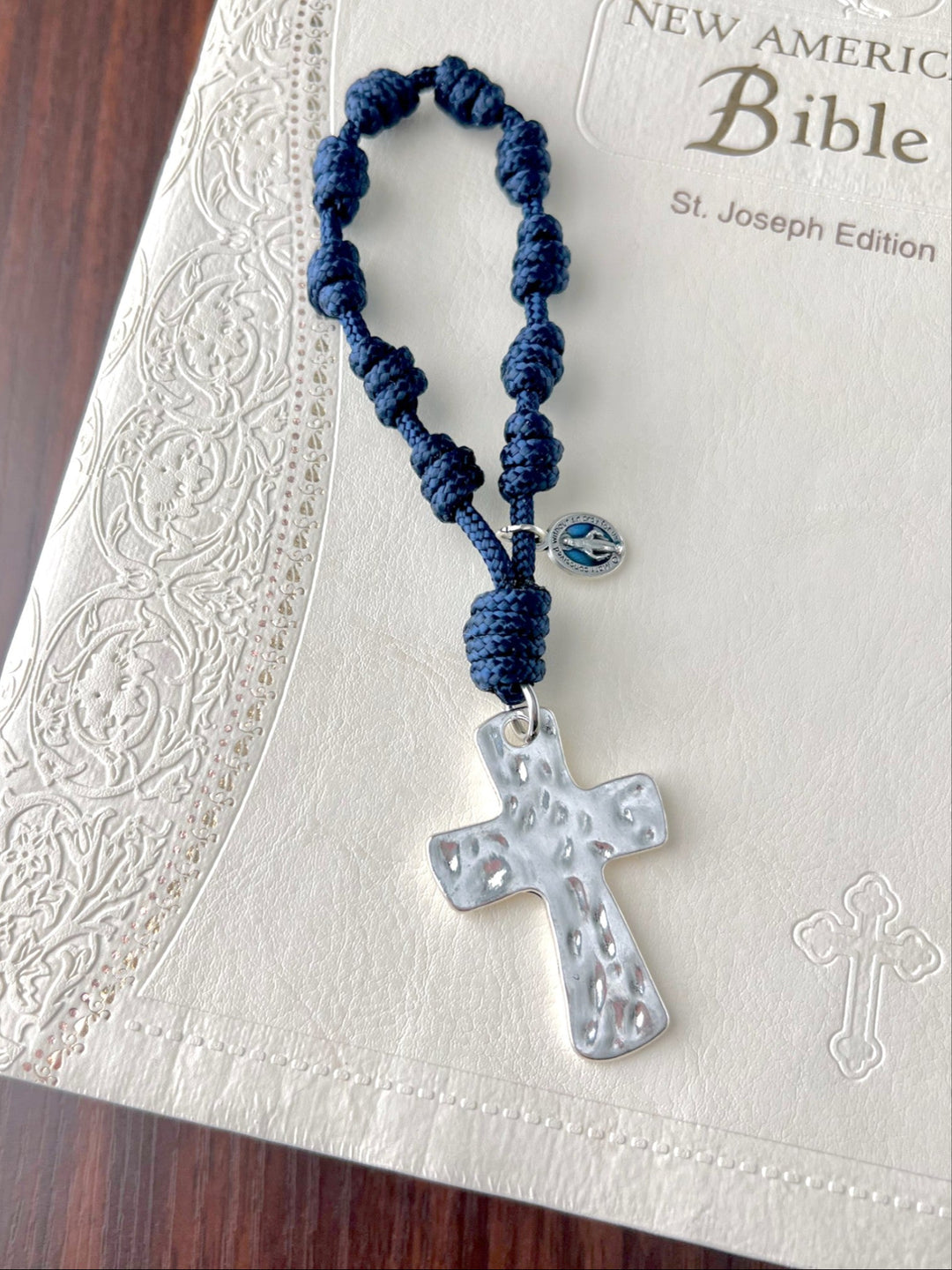
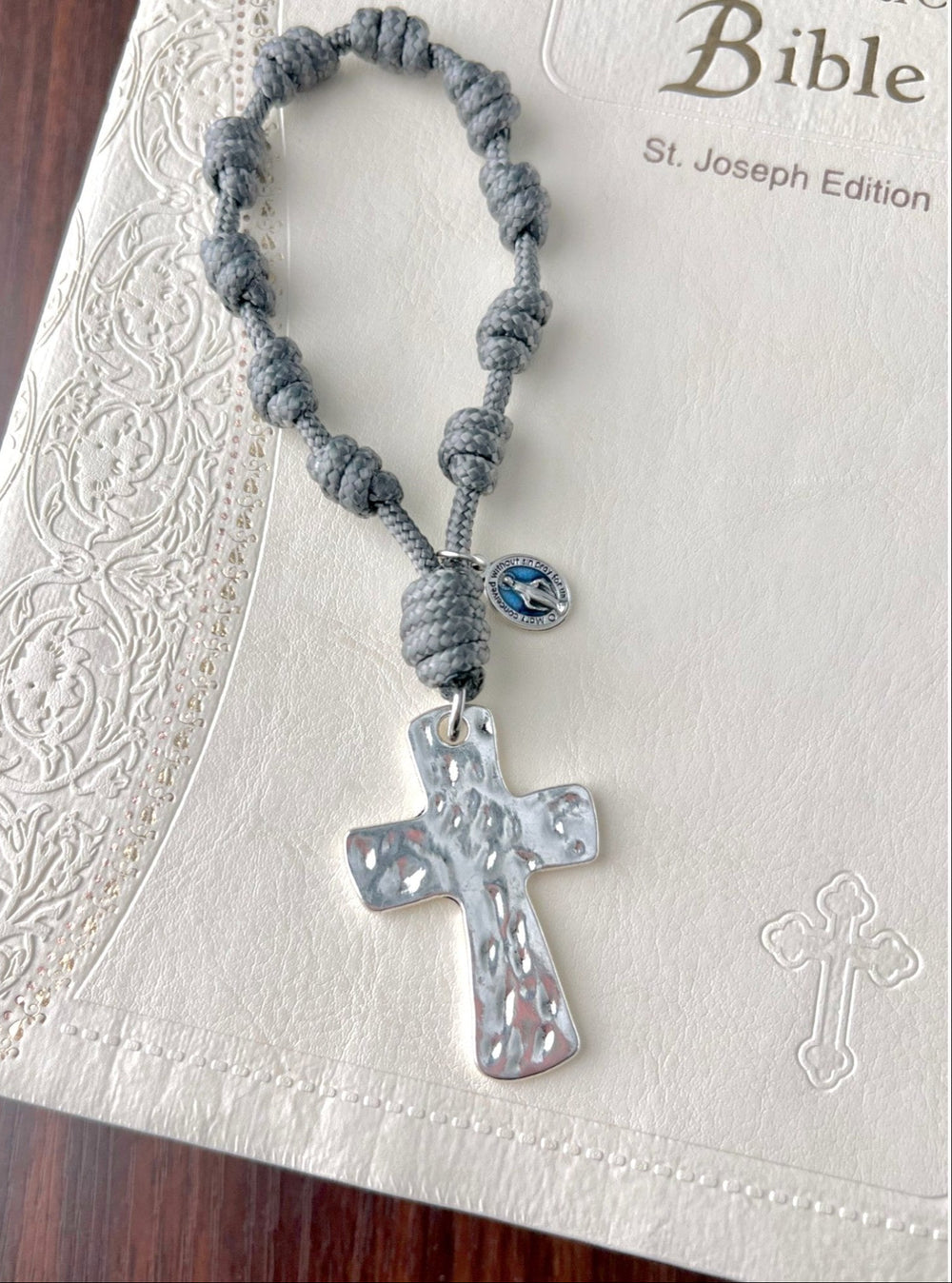
So today, take Mary’s hand with your rosary, and spend a few minutes in prayer. Trust that God can do a great deal with one small, faithful step.
Walking with you in faith,
Kathleen




Thank you, Kathleen.
Leave a comment